Free Proxy List 2026 — Best Sources for HTTP & SOCKS5
Discover the best free proxy list sources for 2026. Learn how to find, verify, and use free HTTP and SOCKS5 proxies that actually work.
Free Proxy List 2026 — Best Sources for HTTP & SOCKS5
Finding a reliable free proxy list in 2026 is harder than it sounds. Thousands of websites claim to offer fresh, working proxies, but the reality is that most lists are outdated within minutes of being published. In this guide, we break down where to find free proxies, how to verify them, and why most lists fail — plus how ipproxy.site keeps its lists fresh and validated in real time.
Why Most Free Proxy Lists Are Unreliable
The core problem with free proxy lists is freshness. A proxy that works right now might be dead in five minutes. Here is why:
- Overuse: Once a proxy appears on a public list, hundreds or thousands of users hit it simultaneously. Servers buckle under the load and go offline.
- Short lifespan: Many free proxies are misconfigured servers or temporary exit nodes. They were never meant to be public and get patched quickly.
- No validation: Most aggregator sites scrape proxies from other lists without checking if they actually work. You end up with lists where 90% of entries are dead.
- Security risks: Some "free" proxies are honeypots designed to intercept your traffic, steal credentials, or inject ads into web pages.
Where to Find Free Proxies in 2026
Despite the challenges, there are legitimate sources. Here are the best categories:
1. Curated and Validated Lists
Sites like ipproxy.site maintain proxy lists that are checked automatically every few minutes. Each proxy is tested for speed, anonymity level, and protocol support before it appears on the list. This is the gold standard for free proxy sources.
2. GitHub Repositories
Several open-source projects on GitHub aggregate and validate proxies on a schedule. Look for repositories that show recent commit activity and include automated CI/CD pipelines for validation. Stale repos with no commits in months should be avoided.
3. Community Forums and Channels
Dedicated proxy communities on Telegram and Discord share proxies in real time. The advantage here is speed — proxies are shared as soon as they are discovered. The downside is that they are also consumed quickly.
4. Public Proxy APIs
A handful of services expose free proxy lists via API endpoints. These are useful for developers who want to integrate proxy fetching into their scripts. Look for APIs that include metadata like response time, country, and anonymity level.
HTTP vs SOCKS5: Which Free Proxies Should You Use?
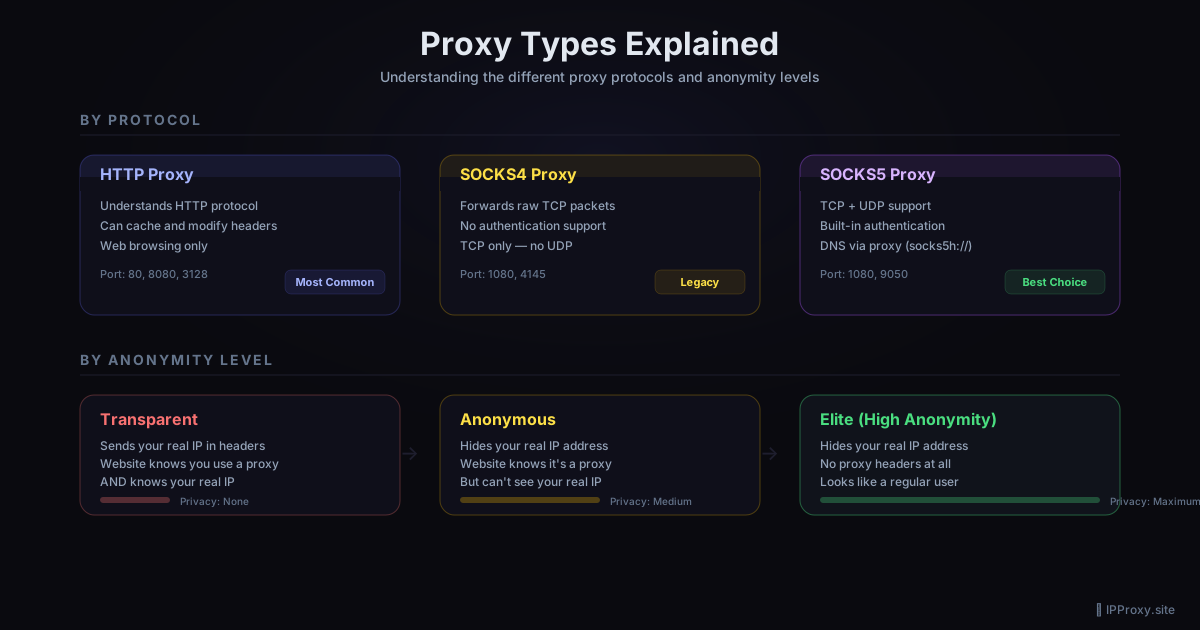
Not all proxies are equal. The two most common types you will encounter on free lists are HTTP/HTTPS and SOCKS5.
HTTP/HTTPS proxies work at the application layer. They understand web traffic and can modify headers, cache responses, and filter content. They are best for basic web browsing and simple scraping tasks.
SOCKS5 proxies operate at a lower level. They forward any kind of traffic — HTTP, FTP, SMTP, or even custom protocols — without inspecting the content. This makes them more versatile and generally faster for tasks like web scraping or managing multiple accounts.
For a deeper comparison, see our guide on proxy vs VPN to understand where each technology fits.
How to Verify Free Proxies Actually Work
Downloading a proxy list is only half the battle. You need to validate those proxies before using them. Here is a practical workflow:
Step 1: Check Connectivity
Attempt a TCP connection to the proxy's IP and port. If the connection times out after 5 seconds, discard it. This simple test eliminates the majority of dead proxies immediately.
Step 2: Test Protocol Support
Send an HTTP request through the proxy to a known endpoint. For SOCKS5 proxies, use a SOCKS-aware client. Confirm the proxy returns a valid response and that your real IP is not exposed.
Step 3: Measure Speed
Time the round-trip of a request through the proxy. Anything over 3 seconds for a simple GET request is too slow for most use cases. Sort your working proxies by speed and prefer the fastest ones.
Step 4: Check Anonymity Level
Send a request to an IP-checking service through the proxy. Compare the returned IP with your real IP. Also check for headers like X-Forwarded-For that might leak your identity. Proxies are classified as:
- Transparent: Forwards your real IP in headers. Almost useless for anonymity.
- Anonymous: Hides your IP but reveals that a proxy is being used.
- Elite: Hides your IP and does not reveal proxy usage.
You can automate all of these steps using our Proxy Checker tool, which tests connectivity, speed, anonymity, and protocol support in seconds.
How ipproxy.site Solves the Freshness Problem
At ipproxy.site, we take a different approach to free proxy lists. Instead of scraping and dumping, we run a continuous validation pipeline:
- Aggregation: We pull proxies from dozens of sources every few minutes.
- Deduplication: Duplicate entries are removed instantly.
- Validation: Every proxy is tested for connectivity, speed, and anonymity in real time.
- Scoring: Proxies are ranked by reliability, speed, and uptime history.
- Delivery: Only validated proxies appear on the list. Dead proxies are removed automatically.
This means when you download a proxy list from ipproxy.site, you are getting proxies that were verified within the last few minutes — not last week.
Tips for Using Free Proxies Effectively
Even with a good list, there are best practices to follow:
- Rotate proxies: Do not send all your traffic through a single proxy. Rotate across multiple proxies to distribute load and avoid bans. Our Proxy Converter tool can help you format lists for rotation tools.
- Use the right protocol: Match the proxy type to your task. HTTP for browsing, SOCKS5 for scraping and social media management.
- Monitor uptime: Proxies go down without warning. Build health checks into your workflow.
- Respect rate limits: Even with proxies, hammering a target site will get your proxies banned. Pace your requests.
- Check for DNS leaks: A proxy that routes your traffic but leaks DNS queries is a privacy failure. Learn more in our guide on how proxies change your IP.
Conclusion
A free proxy list is only as good as its validation. In 2026, the landscape is flooded with stale, unreliable lists that waste your time and potentially compromise your security. By understanding how proxies work, choosing the right protocol, and using validated sources like ipproxy.site, you can find free proxies that actually deliver.
Start with our real-time validated list and verify results with the Proxy Checker.
Related Guides
Get a Fresh, Tested Proxy Right Now
Every proxy is validated every 30 minutes. 1644 working proxies available right now.